













In every payment, two banks are involved — your merchant bank (acquiring bank) and the consumer's bank (issuing bank). RDR, unlike Ethoca, is an acquirer-side product, meaning your payment processor handles the alerts, whether that's Stripe, Shopify Payments, etc.
RDR is triggered later in the payments process. Ethoca alerts typically arrive about a week ahead of RDR, so if you're refunding every Ethoca alert, you should see meaningfully less RDR volume by comparison — but the two don't cover identical transactions, so treat this as a directional pattern rather than an exact ratio.
RDR is a Visa-only program, operated by Verifi. Visa does not consider RDR-refunded transactions chargebacks for the sake of its risk and fraud monitoring programs, and RDR-resolved disputes stay outside the ~1% chargeback ratio Visa monitors. Mastercard does not have an RDR equivalent — Mastercard-network disputes are instead covered through Ethoca.
That said, not all payment processors display or treat RDR-refunded transactions the same way, since they happen so late in the process. More modern processors generally recognize them cleanly, while some legacy processors' dashboards may lump RDR refunds in with regular disputes. If your processor's reporting doesn't match what you expect, it's worth confirming directly with them how they classify RDR events — this is processor-specific and can change without notice.
Here's a non-exhaustive list of processors that work with RDR:
- Stripe
- Shopify
- Paddle
- Authorize.net
- Maverick Payments
- AirWallex
What does RDR look like in my CRM?
CRM displays vary by processor. On Stripe specifically, RDR-resolved cases are labeled "Dispute Lost" or "Unchallengeable Dispute". No matter how a processor labels it, an RDR-resolved dispute does not count against your chargeback ratio.
On Stripe
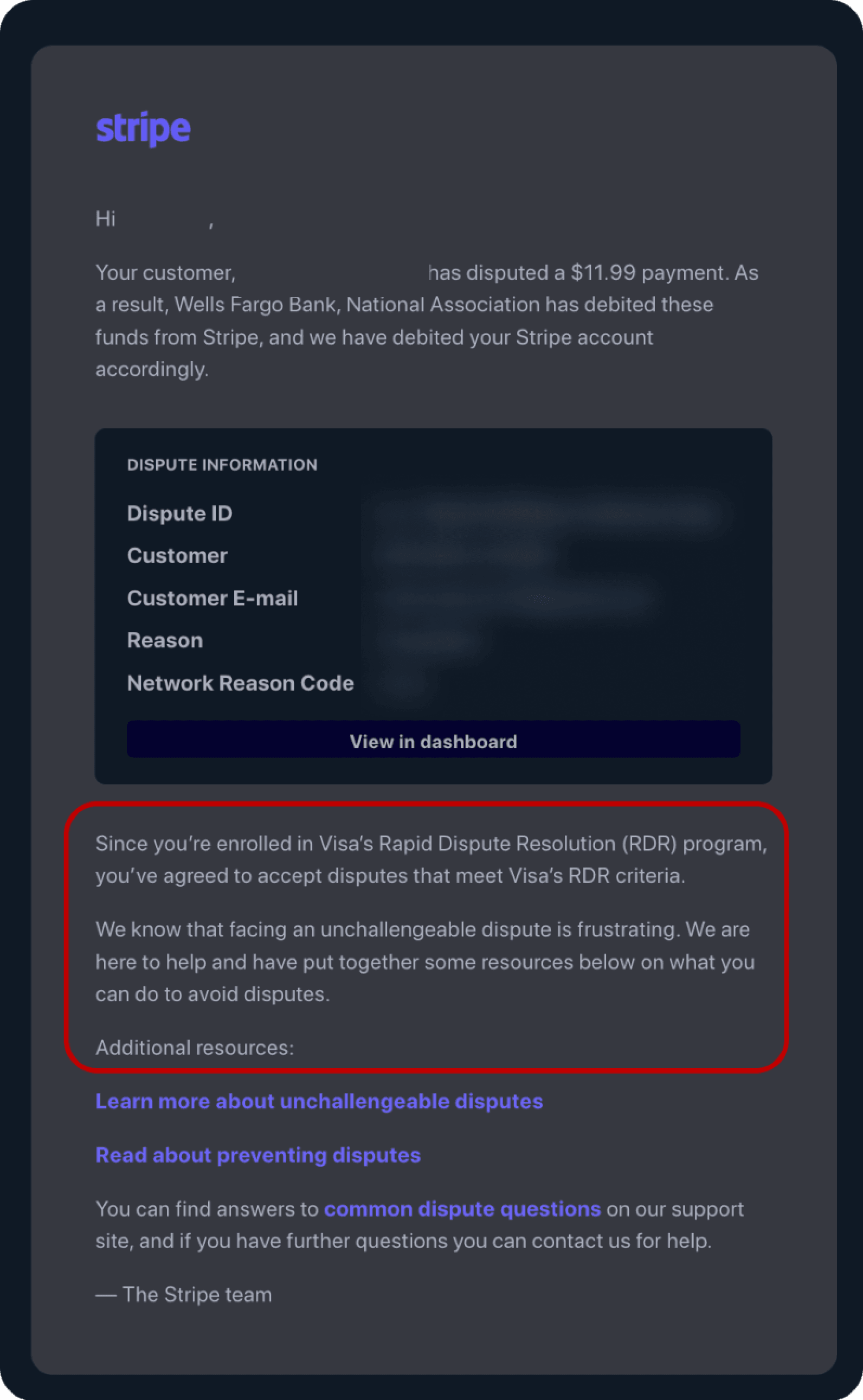
You'll receive an email saying the dispute is unchallengeable, due to enrollment in Visa's RDR program:
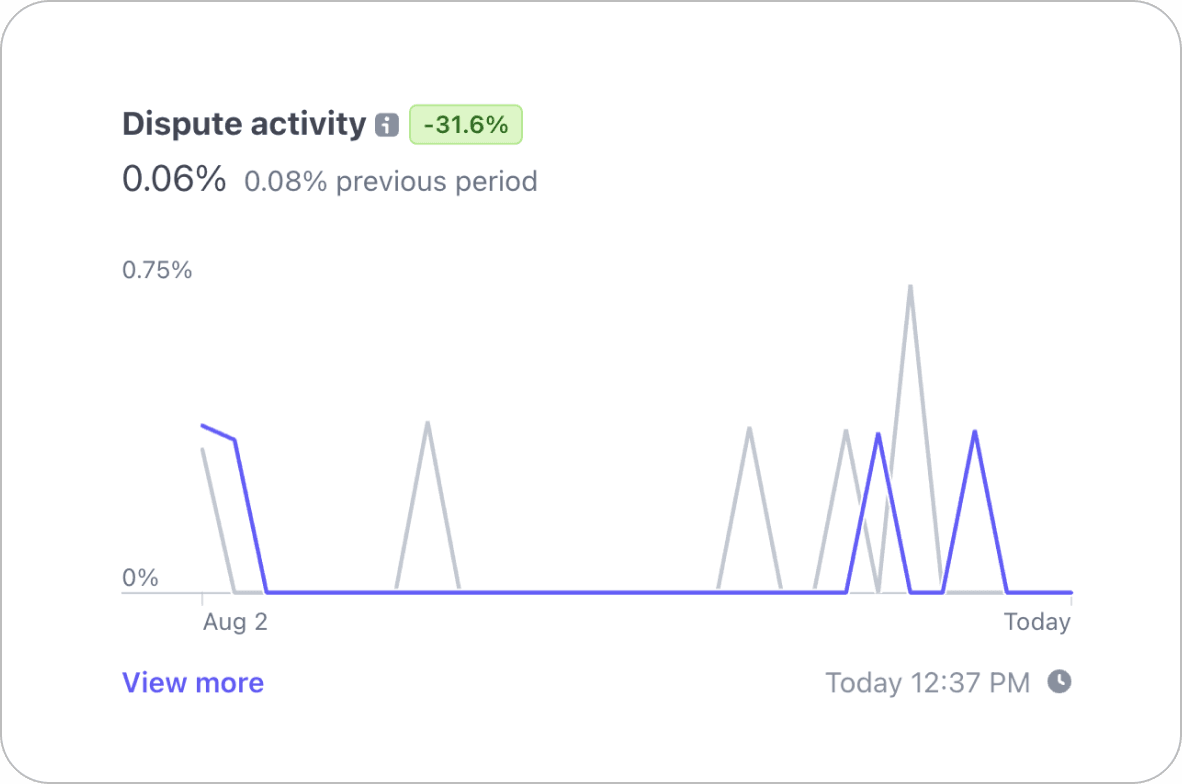
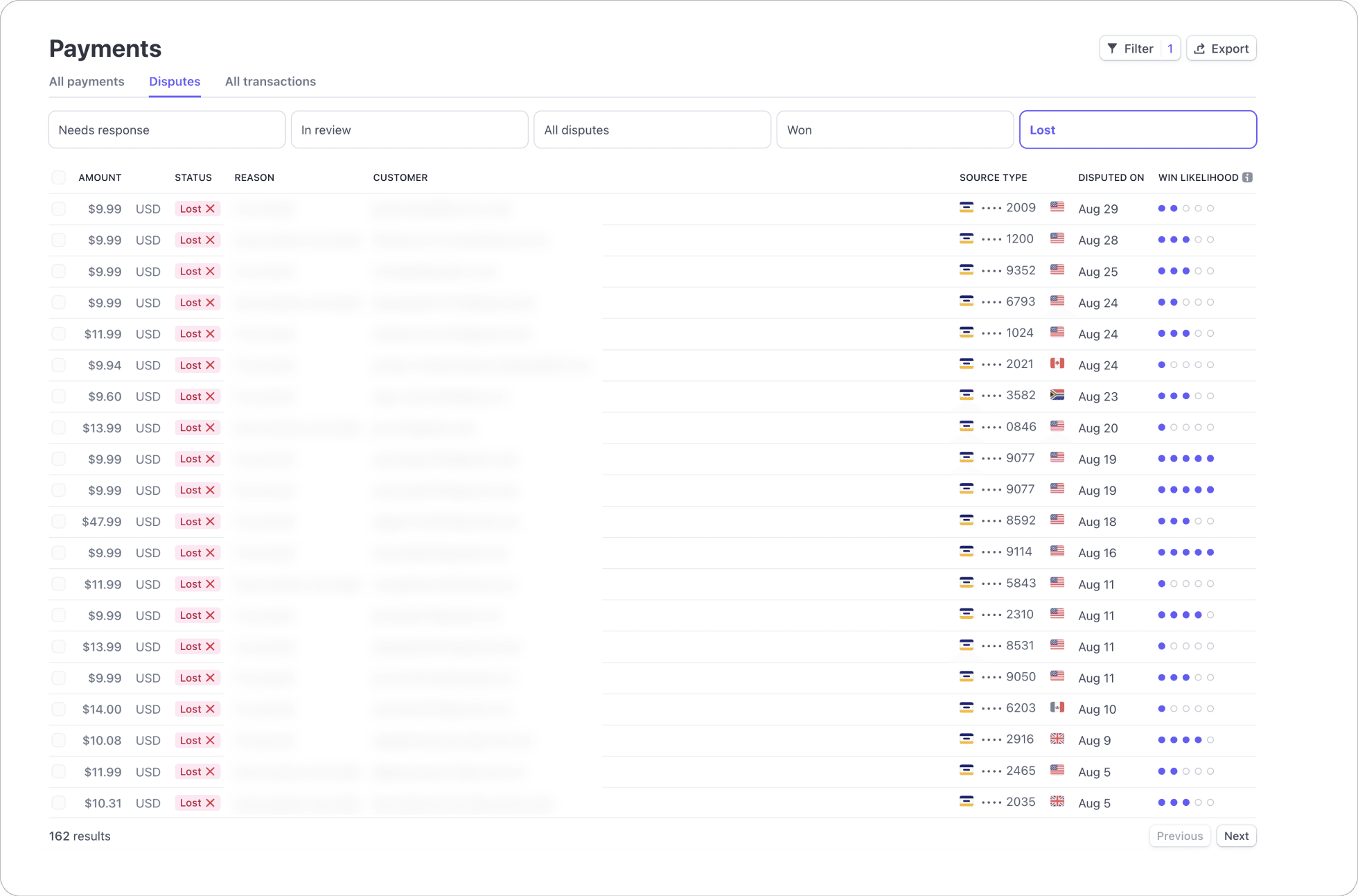
Within the Disputes tab on Stripe, these disputes show up as "Lost". However, they will not count toward your overall Dispute Rate graph on the Stripe dashboard. See the screenshots below:
Note: If Stripe ever quotes you a dispute rate that looks higher than what's shown on your Dispute Rate graph, that usually means they're including RDR events in that number as an internal risk signal — it does not mean those disputes count against your ratio with Visa. If this comes up with Stripe support, you can mention that RDR-resolved disputes are excluded from the ratio, and that CDRN coverage through Chargeblast can further reduce RDR volume if needed.
On Shopify
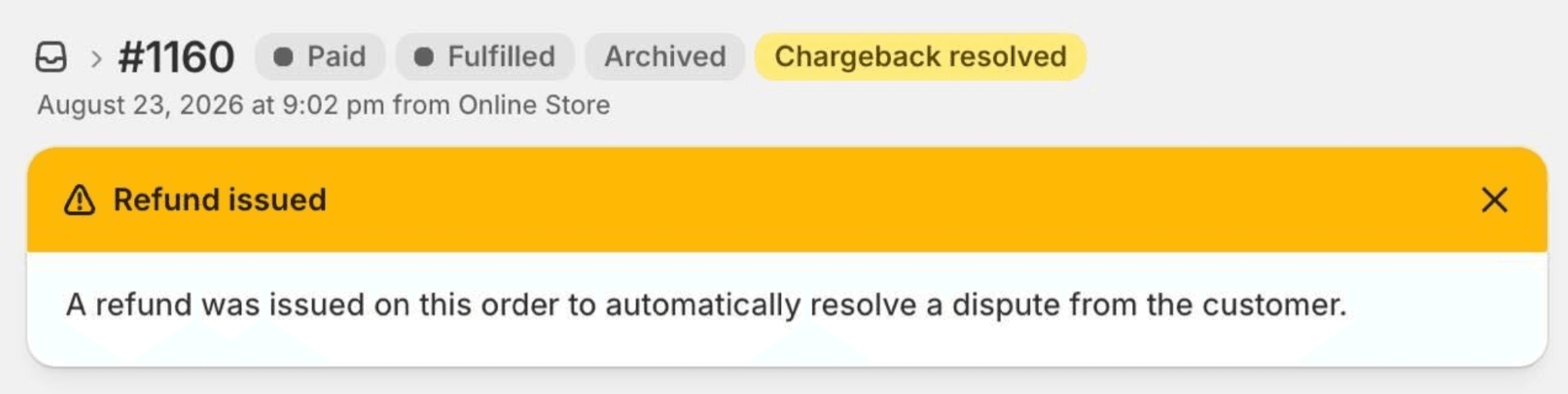
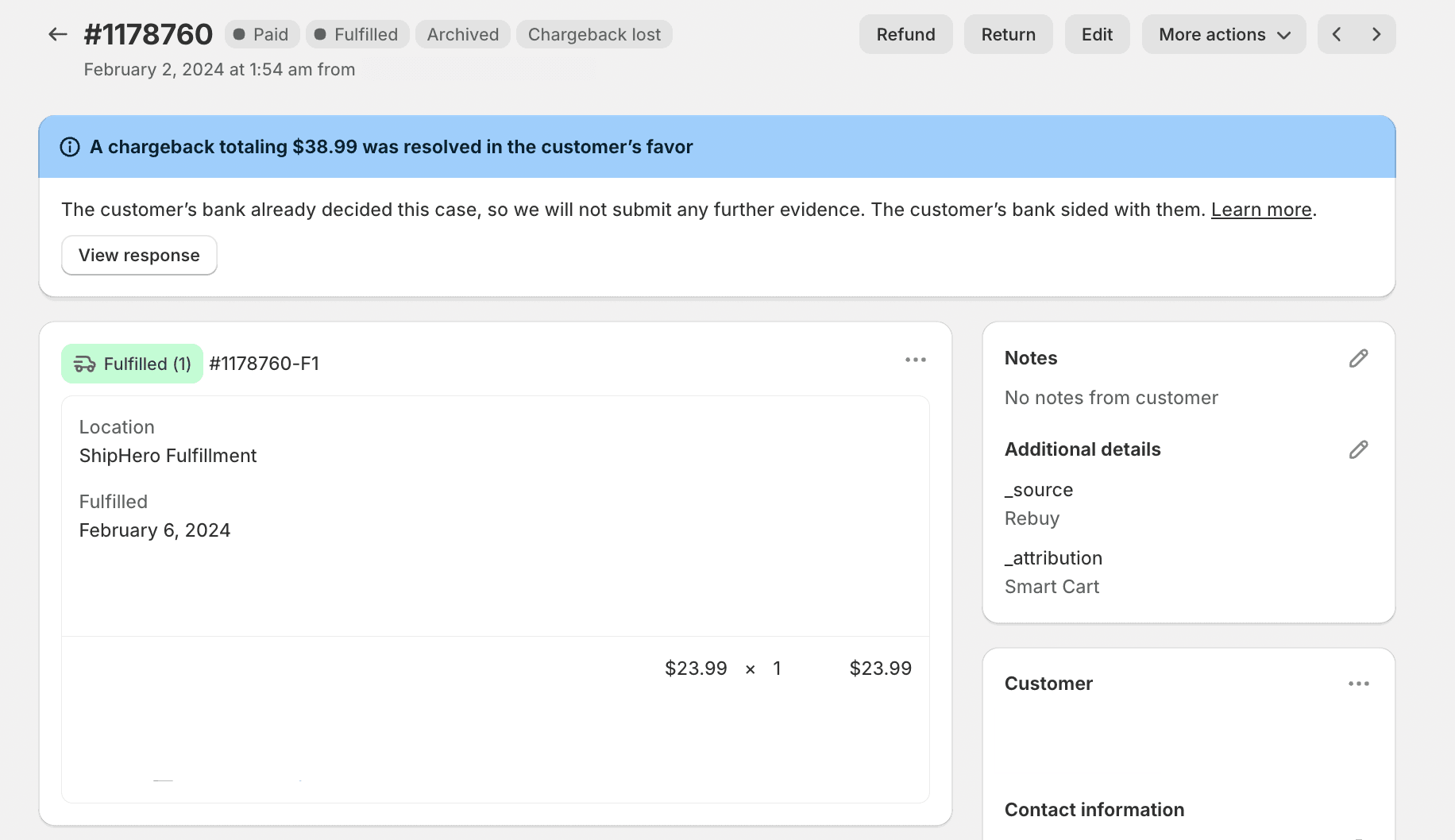
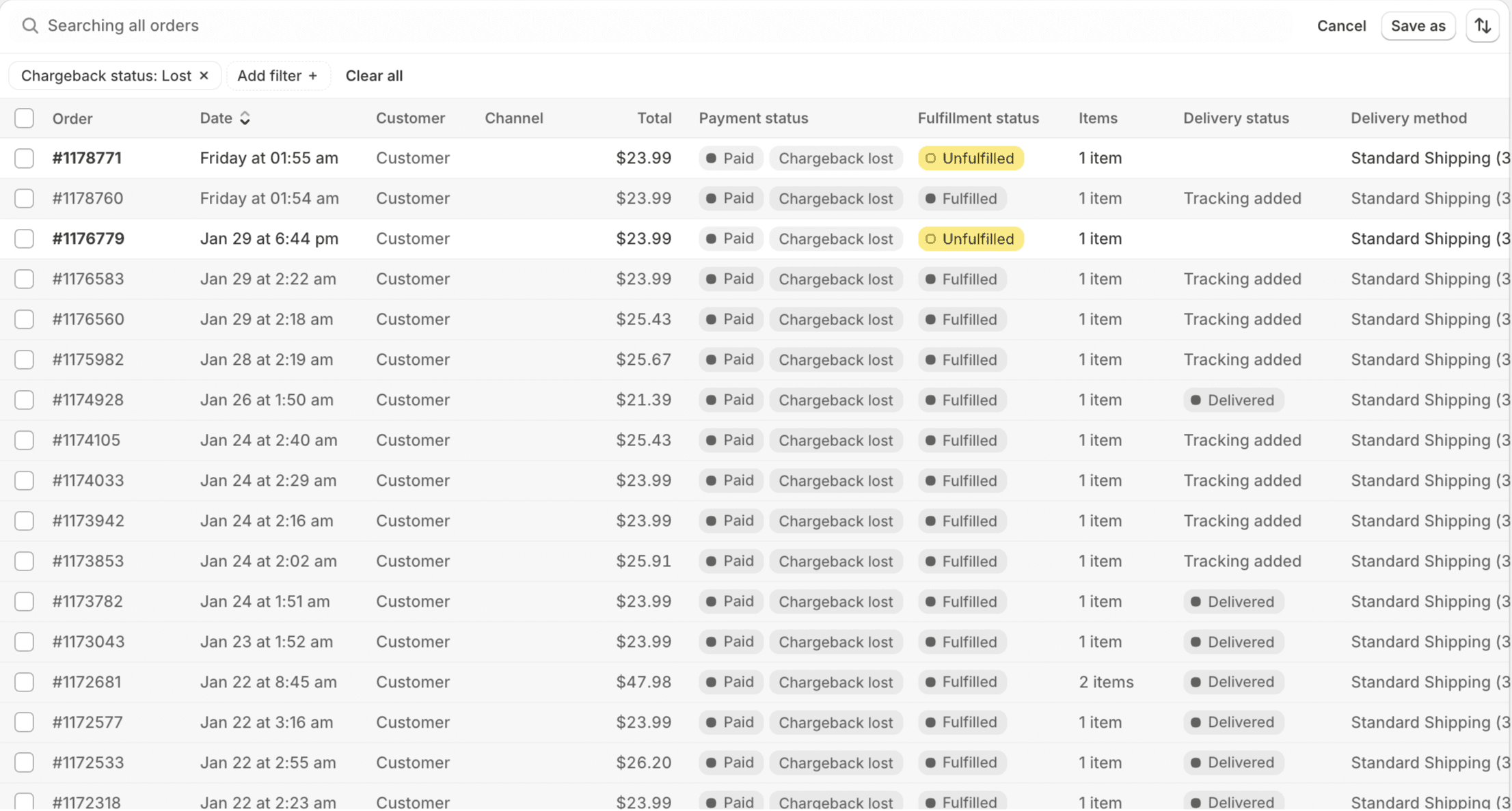
An RDR-refunded may appear on the order with a "Chargeback Resolved" tag and a "Refund issued" banner stating: A refund was issued on this order to automatically resolve a dispute from the customer. On some orders, it may instead appear with a "Chargeback Lost" status, the same label Shopify uses for lost disputes, as shown in the screenshots below.
Although RDR automatically resolves the dispute before it becomes a formal chargeback with Visa, Shopify may still count it toward your dispute ratio.
Why Keep RDR on Shopify?
RDR covers about 98% of Visa disputes and refunds eligible ones automatically based on your ruleset. This stops them from turning into formal chargebacks, which bring fees and count against you with Visa and your processor. Dropping RDR would leave most Visa disputes to escalate.
RDR also protects your ratio under the Visa Acquirer Monitoring Program (VAMP).
How to reduce RDR showing in your Shopify graph
- Enroll in CDRN. CDRN alerts come directly from the card issuer, so Shopify doesn't count refunded CDRN transactions as chargebacks. If you refund CDRN alerts within 24–48 hours, the same transaction generally won't reach RDR. CDRN covers about 40% of Visa disputes, so use it alongside RDR, not instead of it.
- Enable Digital Receipts and Deflection. Both share order details and history with the issuer to resolve the customer's question before a dispute is filed.
- Use the full alert stack. Combine RDR, CDRN, Ethoca (Mastercard), and Discover for the broadest coverage. Amex isn't available for Shopify Payments.
In Chargeblast
Inside your Chargeblast dashboard, resolved RDR alerts are logged with a refund status field (isRefunded) and a reason code. If isRefunded = true, the refund was triggered automatically through your processor integration. If you see isRefunded = false alongside reasonCode = Resolved, it means the alert was closed without a system-processed refund — typically because the processor isn't integrated for automated refunds, or because a refund was issued manually outside of Chargeblast. In that case, the alert may show "No matched transaction" even if the underlying dispute was in fact resolved.
If you see this combination and believe a refund did occur, flag it for investigation — it's usually just a matching or integration gap, not a sign the dispute is unresolved.
Tags
Was this article helpful?
Help us improve our documentation