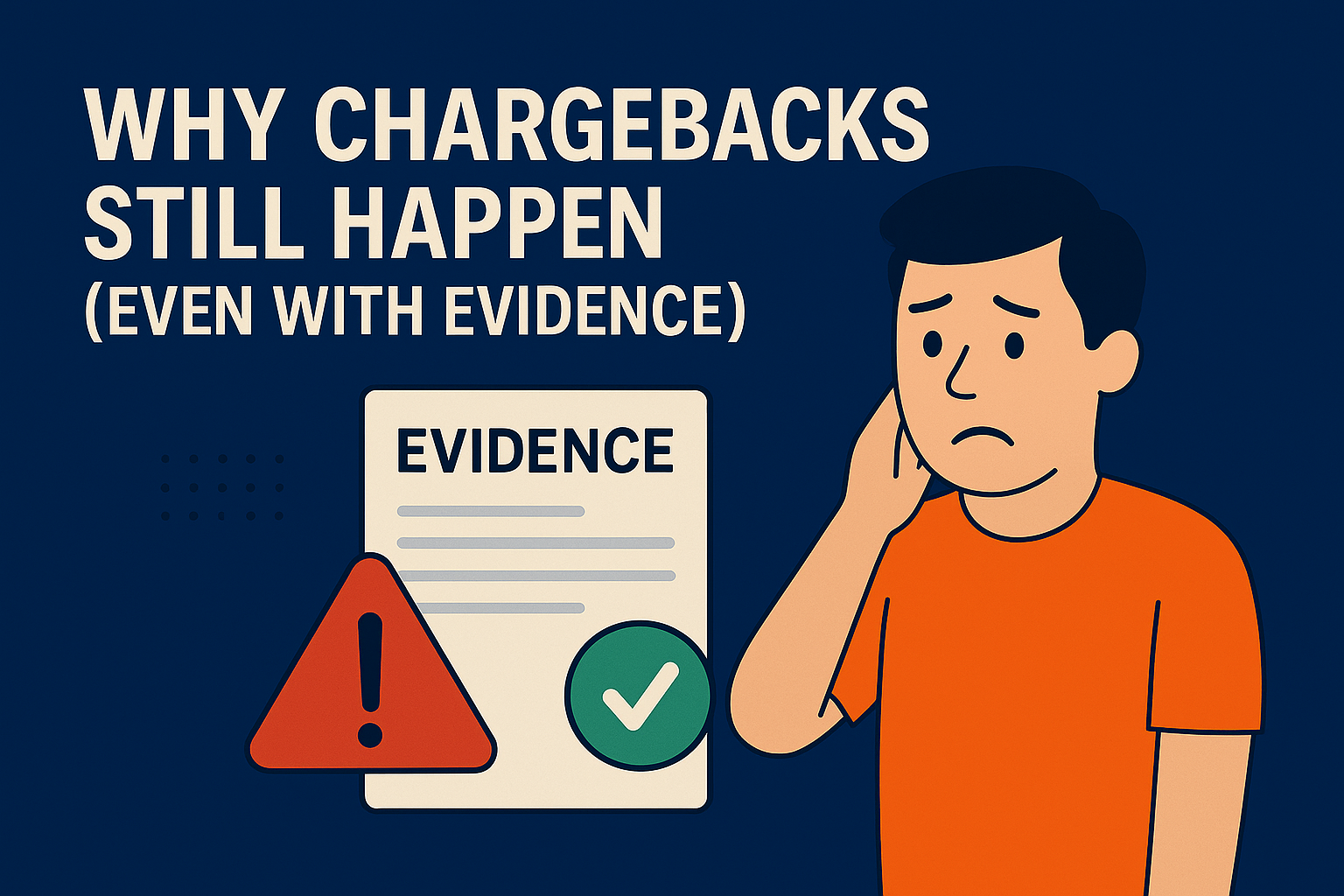
It’s one of the most frustrating things a business can go through. You have the proof. You submitted everything the bank asked for. And still, the chargeback went through.
This happens more than most merchants realize. And the reasons why can feel like a bad joke—except it’s real money lost.
Let’s break down the main reasons why chargebacks are approved even when the merchant has what seems like rock-solid evidence. We’ll also look at a few common cases that show how broken the system can be.
Why Proof Doesn’t Always Matter to Banks
A lot of merchants assume that if they provide tracking numbers, signatures, emails, or screenshots, the issuing bank will review the facts fairly. But that’s not how the process really works.
Here’s the reality:
1. Banks Often Side with Cardholders by Default
Most banks prioritize their customer experience. The customer is their account holder, and their job is to keep that person happy. Unless the merchant’s evidence is indisputable and easily digestible, they may lean toward issuing a refund.
2. Evidence Can Be Rejected for Formatting or Technicalities
Many merchants don’t realize their compelling evidence might get thrown out for not meeting format guidelines. Screenshots may be too small, shipping documents might be missing timestamps, or response letters might be too vague. And unfortunately, banks don’t always explain what was wrong.
3. Banks Don’t Have Time to Investigate Every Detail
Chargeback departments are under time pressure. They handle thousands of cases. If your documentation is confusing, incomplete, or requires a deep dive to understand, it may be easier for them to accept the cardholder’s version of events.
4. Disputes Are Reviewed by People, Not Systems
This isn’t an automated system weighing each piece of evidence with perfect logic. People are reviewing these. And people make mistakes. They may skim a long paragraph and miss the key point. Or misunderstand your supporting docs.
5. The Burden of Proof Is Always on the Merchant
Even if the cardholder is lying, the responsibility is on you to prove they’re not telling the truth. That’s a high bar, especially when cardholders know the right words to say to trigger a winning dispute code.
Real Cases: From Community Posts to Customer Losses
Let’s look at a few examples shared by merchants in online seller forums. These aren’t one-offs—they reflect common problems.
Case 1: Signature Proof, Still Lost
“We had a signed delivery receipt, video footage of the pickup, and a customer email confirming receipt. Still lost the chargeback. The bank just said the customer claimed the item was 'not as described.’”
Why this happens: If the dispute code is “product not as described,” proof of delivery won’t help. You’d need detailed product descriptions, matching customer communications, and ideally screenshots of your site.
Case 2: Digital Product with Access Logs
“Sold a digital download. Provided IP address logs, download timestamps, and the exact browser used. Still lost.”
Why this happens: Banks often struggle with digital goods disputes. They can’t physically confirm the customer accessed or used the product, even if you have access logs.
Case 3: Subscription Charge with No Cancel Request
“Customer claimed they canceled. We showed no cancel request came through, and they used the service for 3 months. Still got reversed.”
Why this happens: If you don’t have a clear and documented cancellation policy, or if your terms weren’t actively agreed to during checkout, the bank may rule it was unclear.
What You Can Do Instead
If evidence isn’t always enough, what can you actually do?
- Use clear, trackable checkout flows: Make sure customers actively agree to terms.
- Document your policies clearly on every transaction: Refunds, delivery timelines, and cancellation terms should be visible and provable.
- Use chargeback alert systems: These can help you respond in real-time or even issue a refund before it escalates.
- Log every customer interaction: Emails, chats, phone calls—keep it all.
- Segment your dispute strategy by reason code: What works for fraud won’t work for "not as described."
FAQs: Why You Might Still Lose a Dispute Even With Proof
Why does the bank ignore my tracking or delivery confirmation?
Because it depends on the reason code. If the customer says the item was defective or not as described, delivery proof doesn't matter unless you can also prove the item was correct and functional.
Can digital products be protected in chargeback disputes?
They can, but it’s harder. You need to provide logs that show access and use, screenshots of customer agreements, and often go through special channels like Visa Compelling Evidence 3.0 to have a real chance.
What if the customer lies? Isn’t that fraud?
It can be, but it’s hard to prove. Most banks won’t accuse their own customer of fraud unless there’s extremely clear evidence—like the customer admitting it in writing.
Can a strong refund policy help me win disputes?
Yes, but only if the customer actively agreed to it. Policies hidden in footers or buried in text don’t carry much weight. Screenshots of the policy at checkout are key.
What if I win a chargeback, can the customer dispute again?
Yes, through second chargebacks or pre-arbitration. Especially on networks like Mastercard. You need to prepare for multiple rounds in some cases.
Prevent Chargebacks Before They Start
Most businesses don’t lose money on chargebacks because they failed to fight. They lose because they had no system to prevent them in the first place.
Chargeblast helps you catch disputes before they happen with alert tools, real-time tracking, and custom mitigation strategies that adapt to your business. We’ll help you build better evidence, reduce your dispute volume, and stay off high-risk lists.
If you’re tired of playing defense, it’s time to shift the game and stick to a prevention tool that works.