












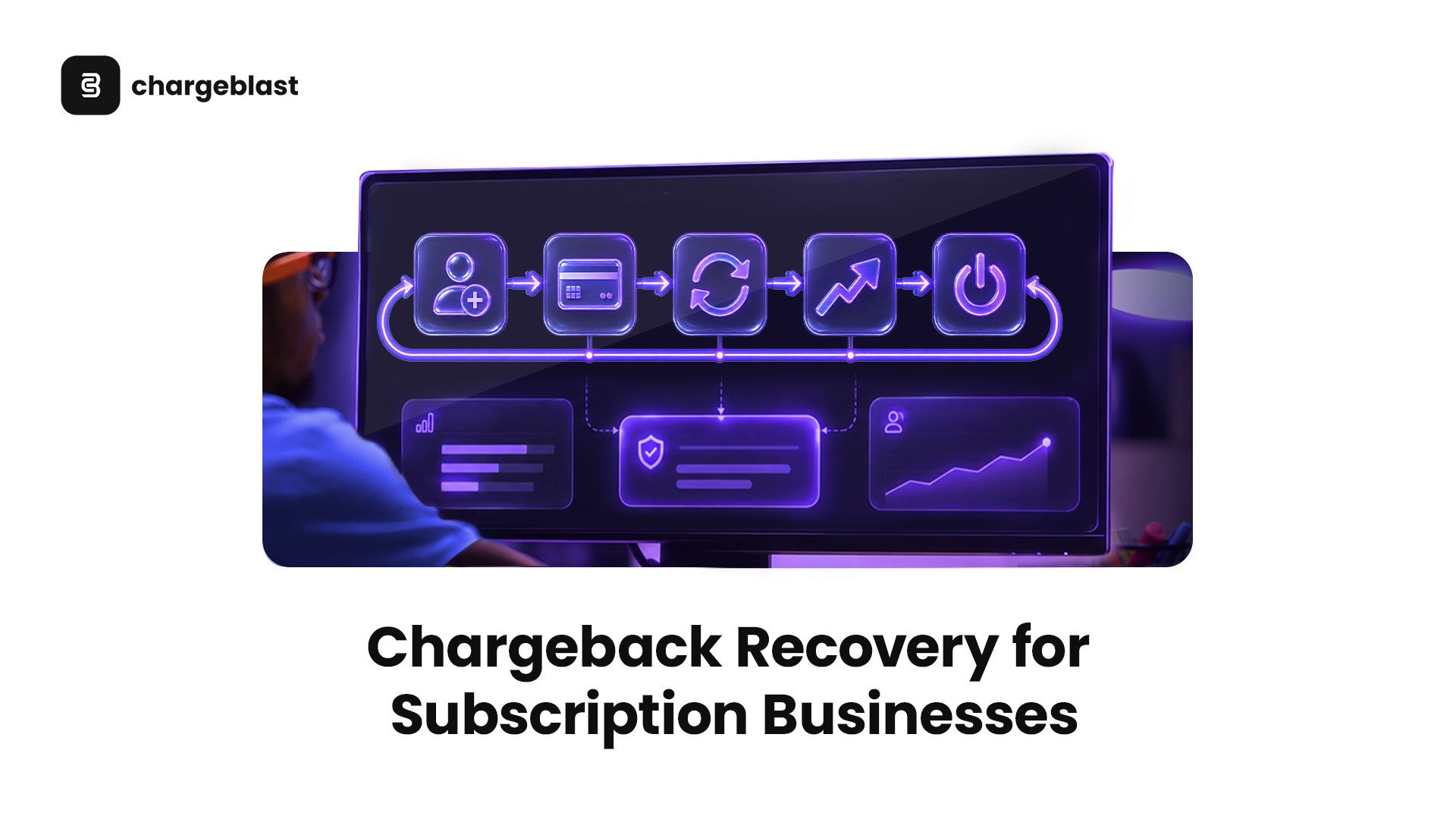
Subscription chargeback recovery works when the evidence proves something a single purchase never has to: that the customer agreed to be billed again, and again. Recurring billing raises questions a one-time sale skips entirely. Did the customer consent to renewal? Did they cancel before the charge posted or after? Did they keep using the account after claiming they walked away? Merchants running a subscriptions solution need records built around those questions, not a generic dispute template.
Recurring billing chargebacks fall into a narrower set of patterns than one-time purchase disputes. Most trace back to five moments: signup consent, renewal notice, cancellation request, service access, and refund status. Documenting each moment as it happens, rather than reconstructing it after a dispute lands, is what separates a recoverable subscription cancellation dispute from a write-off.
Common Subscription Chargeback Types
Subscription merchants see a narrower set of dispute reasons than one-time ecommerce sellers, but each one needs different evidence to answer it.
Cancelled recurring. The cardholder says they cancelled before the charge posted, or that the merchant kept billing after cancellation.
Unrecognized billing. The cardholder does not recognize the charge on their statement, often because the billing descriptor does not match the product name.
Fraud. The cardholder says the account was opened or renewed without their authorization.
Not provided. The cardholder says the subscription never delivered the promised access or content.
Not as described. The cardholder says the plan, tier, or feature set did not match what was advertised at signup.
Duplicate. The cardholder was billed twice for the same billing cycle, often from a failed payment retry.
Credit not processed. The cardholder requested a refund or downgrade credit the merchant approved but never issued.
These categories overlap with disputes SaaS platforms see more broadly. For a wider look at how SaaS merchants handle disputes outside recurring billing specifically, see this guide to SaaS chargeback recovery.
Build a Subscription Evidence Timeline
A subscription runs through the same ten moments every time: signup, consent, trial, renewal notice, billing, usage, cancellation request, access end, refund, and dispute. Recovery works best when a merchant can point to records from each one, not just the transaction itself.
Signup and consent records show the customer agreed to recurring billing, ideally with a timestamp, IP address, and the terms shown at checkout. Trial data shows when a free or discounted period converted to a paid one, which matters for cardholders who claim they never intended to be charged.
Renewal notices show the customer was told a charge was coming, not just that terms mentioned it somewhere. Billing and usage records connect the charge to actual account activity, which matters most for not provided and not as described claims.
Cancellation requests and access end dates are the two data points issuers weigh most heavily in a cancelled recurring dispute. Refund and dispute records close the loop, showing whether the merchant already resolved the issue before the chargeback was filed.
Merchants who store these data points as they happen spend less time reconstructing a case after a dispute notification arrives, which matters more the closer a case gets to its response deadline.
Evidence for Cancelled Recurring Claims
Cancelled recurring is the most common subscription dispute, and also the easiest to get wrong. The core question is timing: did the charge in question post before or after the customer's cancellation request went through?
Four records matter most. The cancellation timestamp shows exactly when the customer submitted the request, through the account portal, support ticket, or email. The subscription terms shown at signup establish what "cancelled" means, including whether cancellation takes effect immediately or at the end of the current billing period.
The effective date reconciles the two. If the terms say cancellation applies at period end and the disputed charge fell within that period, the charge was valid. Charges that landed after the stated effective date usually cannot be defended and should be refunded before submitting evidence for the rest of the case.
Continued access and account activity after the cancellation date can undercut a customer's claim that they stopped using the service. Support communications, including any cancellation confirmation sent to the customer, round out the record.
None of this means terms alone settle the dispute. A cancellation policy does not override a customer's right to a refund if the merchant continued billing after a valid cancellation request, and evidence should never be framed that way.
Evidence for Unrecognized or Fraud Claims
Unrecognized billing and fraud claims both start with the same problem: the cardholder does not connect the charge to something they did. The evidence needed to resolve them focuses on identity, not billing history.
The billing descriptor is the first thing to check. When a statement descriptor does not clearly match the product or brand name, some unrecognized disputes trace back to confusion rather than fraud, and updating the descriptor tends to prevent repeat cases.
Account identity data, including the email, name, and account creation details, ties the subscription to a specific customer. Authentication records, such as login history, device fingerprints, and IP addresses at signup and renewal, help establish that the same customer has been accessing the account.
Usage history matters here too. A subscription with months of regular logins, feature use, or support interactions is harder to dispute as unauthorized than one that was never accessed after signup.
Previous undisputed payments on the same card or account add context. A customer who paid the same recurring charge for several billing cycles without complaint, then disputes a later one, presents a different pattern than a first-cycle dispute.
Evidence for Service and Refund Claims
Not provided, not as described, and credit not processed claims all center on what the customer actually received, not on billing mechanics. Evidence has to show entitlement and delivery, not just payment.
Entitlement records show what plan or tier the customer signed up for and what that plan included. Account activity, drawn from product usage evidence such as login timestamps, feature usage, or API calls, shows whether the customer accessed what they paid for during the disputed billing period.
Support interaction history matters specifically for not as described claims. If a customer raised a concern about the plan before filing a dispute, the resolution offered, and whether the customer accepted it, both belong in the response.
Service period alignment ties the charge to a specific window of access, which is what issuers expect to see for a subscription rather than a single delivery date.
For credit not processed disputes, the merchant's own refund or credit records settle the question directly. If a refund was promised, the timestamp and amount need to match what was promised. If it was not yet processed, the charge is difficult to defend and should be resolved before responding.
Subscription Recovery Workflow
Recovering subscription chargebacks reliably depends on a workflow, not a one-off response to each notification.
Triage comes first. Not every dispute is worth contesting, and sorting by reason code and dollar value early keeps the team focused on cases with a real chance of recovery.
Data retrieval pulls the specific records tied to that customer and billing cycle: signup consent, renewal notices, usage history, cancellation requests, and refund status, depending on the reason code.
Review checks the retrieved data against the claim before anything gets submitted, catching cases where a refund is actually owed rather than a dispute worth fighting.
Submission assembles the evidence into the format the acquirer and card network require, within their response window. For a closer look at building that response, see this chargeback evidence guide.
Reconciliation closes the loop, tracking which disputes were won, lost, or refunded, and feeding that data back into retrieval for the next cycle.
Chargeblast Recovery is built around this workflow, handling case documentation and representment for recurring billing merchants so the process runs consistently instead of case by case.
What Recovery Data Should Fix Upstream
Recovery data is a feedback loop, not just a defense file. Patterns in disputed cases point to where the billing and cancellation experience needs adjustment.
Renewal notices are the first place to look. A high volume of cancelled recurring disputes often means customers are not being told a renewal charge is coming, or the notice is easy to miss.
Descriptors matter next. When unrecognized billing disputes cluster around a specific descriptor, updating it to match the product name more closely usually reduces the pattern.
The cancellation experience itself is worth auditing. If customers repeatedly claim they cancelled and were still charged, the cancellation flow may be harder to complete than it should be, or confirmation may not be reaching them.
Support response patterns and refund policy clarity round out the list. Disputes tied to slow support responses or unclear refund terms tend to repeat until the underlying policy changes, which is the difference between one-off recovery and dependable recovery for subscriptions.
Frequently Asked Questions
Can merchants fight cancelled subscription chargebacks?
Yes, when the merchant has records showing the disputed charge fell within the customer's active billing period under the cancellation terms shown at signup. A cancellation timestamp, the effective date under those terms, and account activity after the disputed charge posted are usually enough to support a response. Charges that fell after a valid cancellation date should be refunded rather than disputed.
Do renewal emails help recover subscription chargebacks?
Renewal notices support subscription cancellation disputes and unrecognized billing claims by showing the customer was told a charge was coming before it posted. They work best paired with proof the notice reached a verified email address ahead of the billing date, not just a reference buried in the terms of service.
What proves continued access in a subscription dispute?
Login history, feature usage, API calls, or support interactions after the disputed charge date typically prove continued access. This evidence works well against not provided and cancelled recurring claims, since it shows the customer kept using the account after claiming they stopped.
How is subscription chargeback recovery different from one-time purchase disputes?
Subscription disputes hinge on consent to repeat billing, renewal timing, and cancellation effective dates, questions a single purchase does not raise. Evidence has to reconstruct a billing relationship over time rather than a single transaction, which is why a dedicated evidence timeline matters more for recurring billing chargebacks than for one-off sales.
What happens to subscription chargebacks a merchant cannot recover?
Cases without supporting evidence, such as charges billed after a valid cancellation or refunds promised but not issued, are usually not worth contesting. Refunding those directly before a formal dispute is filed, where possible, avoids the chargeback entirely and protects the merchant's dispute ratio.
Recovering Revenue From Recurring Billing
Subscription chargeback recovery comes down to documentation discipline: capturing consent, renewal, cancellation, and refund data as it happens, then organizing it fast enough to meet response windows. Chargeblast Recovery handles the representment side of that process for recurring billing merchants, and the subscriptions solution page covers how Chargeblast supports subscription billing platforms end to end.

