












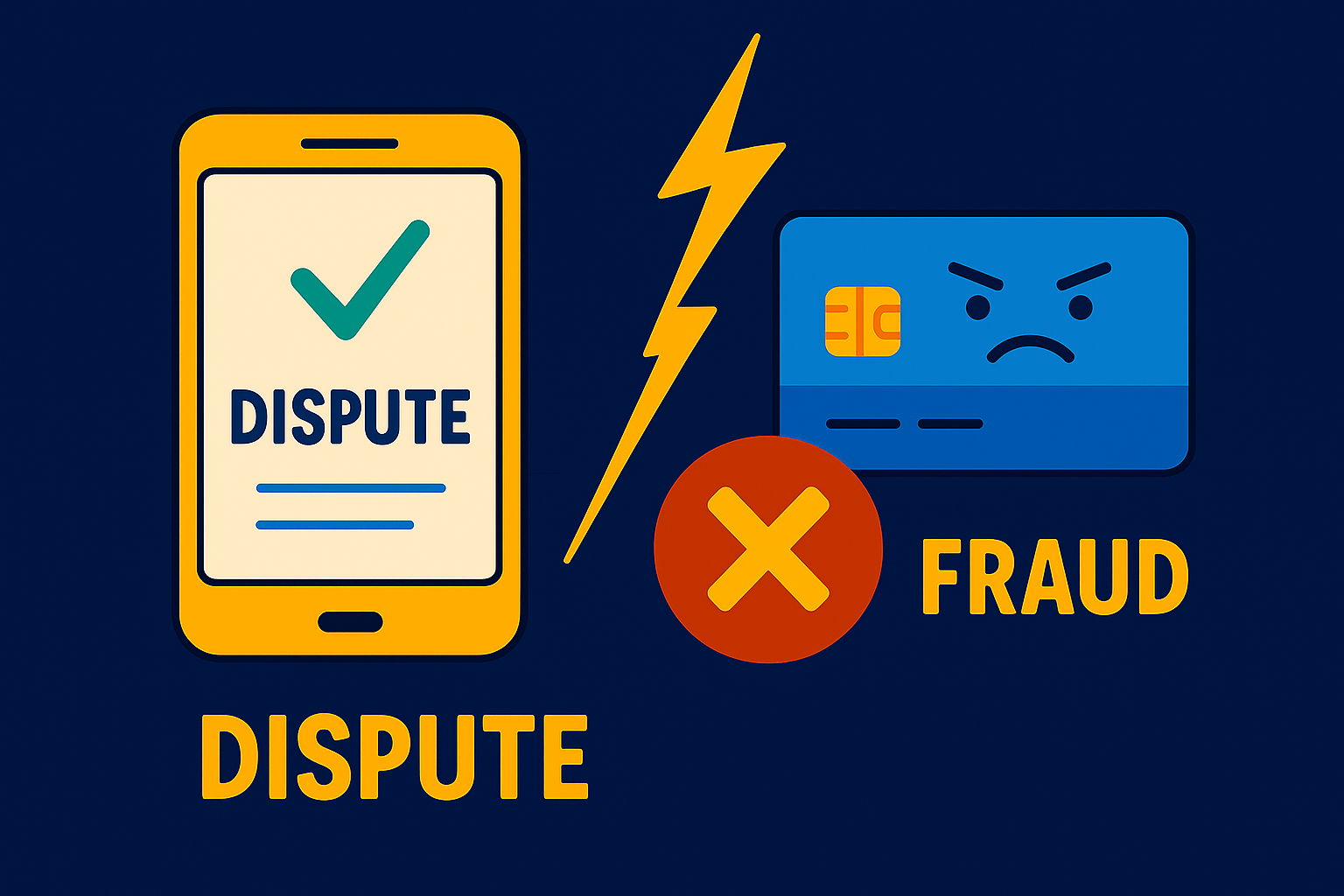
Disputes are already hard to win. But if you pick the wrong category, whether dispute or fraud, you might lose before anyone looks at your evidence. And that's not a metaphor. One bad label can get your case auto-denied or tossed into the wrong review path. In this post, we're breaking down how dispute classification risk works, why it matters, and how your internal workflows may be sabotaging your own chargeback win rate.
What Is Dispute Classification Risk?
Dispute classification risk refers to the danger of misidentifying the type of chargeback you're fighting. This usually happens at two critical points:
- During reason code assignment
- During evidence submission and case narrative writing
When you call a transaction "fraud" that's really a billing dispute (or vice versa, you're setting yourself up for failure. The card network expects your evidence to match the reason code. If it doesn't, your chances plummet.
Even worse, some systems will auto-decline your case if the classification contradicts the customer's claim or doesn't meet the expected format.
Why the Wrong Label Can Get You Auto-Losses
1. Fraud Claims Trigger Different Requirements
Let's say the customer reported an "unauthorized transaction." That's fraud, which means the evidence you submit has to show:
- Proof of identity verification (AVS, CVV, 3DS, login/IP logs)
- Proof the cardholder participated in the transaction
- Strong customer authentication (SCA) where required
If you submit a shipping invoice or a refund policy instead, the reviewer may dismiss your claim for being non-responsive. You didn't provide evidence to counter fraud. You treated it like a merchant error.
2. Disputes Based on Service or Product Issues Require Context
On the flip side, if the customer claims "item not received" or "product not as described," and you call it "fraud" in your internal system, you're misclassifying the issue. That can make your reps prepare the wrong evidence or even ignore relevant communication like email threads or delivery disputes.
How Internal Workflows Lead to Bad Classification
Many merchants rely on customer support platforms, CRM notes, or order flags to auto-tag disputes as fraud or service. But those tools are only as good as the input. Here's where things go wrong:
- Support teams mark everything as fraud if the customer threatens a dispute
- Chargeback tools default to "unauthorized" when there's no clear reason
- Agents submit the same template response across fraud and service claims
These shortcuts speed things up. But they create risk. When your classification is off, your representment doesn't stand a chance.
Networks and Processors Are Getting Stricter
Visa's Compelling Evidence 3.0 (CE3.0) framework requires merchants to provide matching transaction history when responding to fraud claims. If you mislabel a dispute and don't include that data, you're flagged as non-compliant.
Mastercard has also added dispute resolution thresholds and internal scoring. A poor track record in matching reason codes and evidence can impact your credibility as a merchant. That can lead to faster denials or fewer allowed representments.
Best Practices to Avoid Misclassification Mistakes
Use Reason Code Mapping
Build or use a mapping table that aligns customer claims to actual network reason codes. If your team hears, "I didn't get my item," that should not be coded as fraud.
Don't Reuse Evidence Templates Blindly
Tailor each response based on the reason code. For fraud, lead with identity and authorization data. For service disputes, focus on delivery confirmation, product photos, customer service interaction, and refund timelines.
Build Dual Review Into Your Workflow
Have one team classify the dispute, and another team build the response. Or at minimum, require a review step where the reason code and narrative are compared for consistency.
Train Support and Risk Teams Together
Many classification errors come from misalignment between customer-facing support and back-end risk teams. Teach both sides how mislabels hurt win rates.
Conclusion
You can have all the proof in the world, but if your claim doesn't match the label, you're wasting time. Dispute classification risk is real. It's one of the most overlooked reasons merchants lose chargebacks. Taking the time to classify correctly, build tailored responses, and clean up internal workflows can significantly improve your representment outcomes.
FAQs: Dispute vs Fraud
What happens if I choose the wrong reason code?
Choosing the wrong reason code leads to misaligned evidence and a high chance of automatic denial. Card networks expect your evidence to directly respond to the type of dispute. A mismatch weakens your claim.
How do I know if a chargeback is fraud or not?
Start with the reason code the bank provides. "Fraud—Card Not Present" (like Visa 10.4 or Mastercard 4837) indicates the customer said they didn't authorize the charge. Claims about product quality, delivery, or refund timing are usually service disputes.
Can I change the dispute category after I've submitted it?
In most cases, no. Once a representment is submitted, it's locked. That's why getting the classification right from the start is critical. Some systems may allow edits during draft stages, but not after submission.
Do all banks and networks treat mislabels the same way?
No. Visa and Mastercard have different rules, and acquiring banks can add another layer. Some may give feedback, others will simply deny the claim without explanation. But all expect clean classification and relevant evidence.
Is this just a problem for manual representments?
No. Even automated chargeback systems can misclassify disputes if your workflows or integrations don't feed accurate context. The faster the process, the more risk you have if tagging is off.
Get Your Labels Right Before It's Too Late
Most chargeback tools focus on speed. But speed without accuracy gets you nowhere. Chargeblast's dispute classification system checks reason code alignment before your case even goes out the door. That means fewer auto-denials, stronger evidence matching, and a better shot at getting your money back. Don't let a mislabeled claim ruin your win rate. Let us handle it the right way.

