Chargeblast publishes this comparison and is one of the products evaluated. We've aimed to represent Chargeflow's capabilities accurately based on publicly available information.
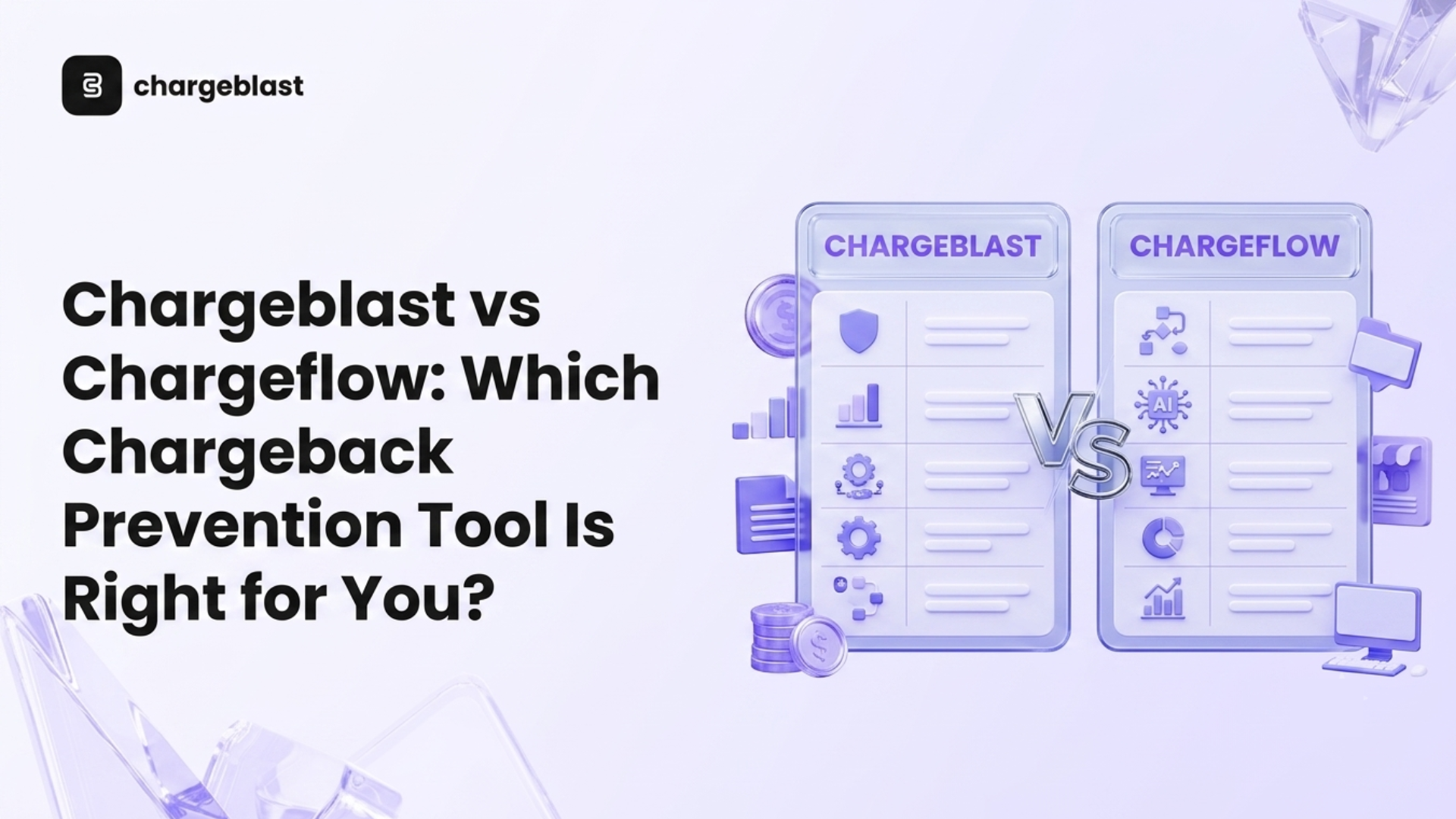
Chargeblast and Chargeflow are both chargeback tools, but they're built around fundamentally different strategies. Chargeblast is built around prevention: intercepting disputes through Visa and Mastercard's pre-dispute alert networks before a chargeback is ever filed. Chargeflow is built around representment: fighting chargebacks after they've already been filed using AI-automated evidence submission.
That difference matters more than any feature list. A won representment recovers revenue, but the chargeback has already been filed and already counts against your ratio. A prevented chargeback never touches your ratio at all. The right tool depends on whether your priority is protecting your account health or recovering disputed revenue, and those aren't always the same goal.
At a Glance
Chargeblast | Chargeflow | |
Core approach | Prevention and deflection (pre-dispute) | Representment and recovery (post-dispute) |
Trustpilot rating | 4.4/5 ("Excellent," 158 reviews) | No Trustpilot rating |
Platform notices | None | "Breach of guidelines: We've removed a number of fake reviews for this company." (Trustpilot) |
How it works | Intercepts Visa/Mastercard alerts; auto-refunds before the chargeback is filed | AI builds and submits dispute evidence on your behalf |
Products | Deflection, Alerts, Recovery, Dashboard | Automation, Alerts, Prevent, Insights |
Chargeback ratio impact | Direct: disputes never filed, ratio stays clean | Indirect: dispute is filed first, then contested |
Human oversight | AI + human-led team | Fully automated AI |
Dispute coverage | Up to 99% (Capterra, 2026) | Up to 90% reduction in chargebacks (per chargeflow.io) |
Merchants served | 5,000+ globally | 20,000+ globally |
Payment volume protected | $20B+ | Not publicly disclosed |
Integrations | Shopify, Stripe, PayPal, and more | 100+ processors, gateways, and platforms |
Alerts pricing | $19 per prevented Visa alert; $29 per prevented Mastercard alert | $29 per prevented chargeback (per chargeflow.io pricing page) |
Representment pricing | Custom (Recovery product) | 25% of recovered chargeback amount |
Setup fee | None | None |
Monthly fee | None | None |
Contract | None | None |
Trustpilot profiles as observed September 8, 2026. Quotations are Trustpilot's own published notices. Trustpilot is not affiliated with Chargeblast and has not endorsed this comparison.
Where Chargeblast Wins
1. Merchants focused on protecting their chargeback ratio
Prevention is the only approach that keeps disputes off your ratio entirely. Chargeblast intercepts alerts from Visa and Mastercard's networks and processes refunds automatically before the chargeback is ever filed. A dispute that doesn't get filed doesn't count. Chargeflow can win a dispute back, but the chargeback still appears in your ratio before that win is processed. For merchants approaching Visa's 0.9% or Mastercard's 1.5% monitoring thresholds, that distinction is critical. Read more about what happens when your chargeback rate hits monitoring thresholds.
2. Merchants who want human expertise alongside automation
Chargeblast pairs AI automation with a human-led team. For merchants who want active oversight on their dispute management rather than a fully automated black box, that's a meaningful difference. Edge cases get handled properly instead of failing silently in an algorithm.
3. Merchants who want full lifecycle coverage in one platform
Chargeblast's Deflection product uses Visa's Compelling Evidence 3.0 and First Party Trust programs to block disputes at the network level. Pre-dispute Alerts handle the cases that reach the alert stage. And if a chargeback still gets through, the Recovery product handles representment. One platform, one dashboard, no tool stacking. See how to build a complete chargeback protection plan for what that looks like end-to-end.
4. Merchants with mid-to-high average order values
Chargeblast's per-alert pricing is flat regardless of order value. Chargeflow's 25% representment fee scales with the transaction amount. On a $300 order, a won representment costs $75 in Chargeflow fees alone, on top of the processor dispute fee. Flat pricing is easier to forecast and typically cheaper per incident at higher AOVs.
Where Chargeflow May Be a Better Fit
High chargeback volume with fully automated representment needs
Chargeflow's representment AI is trained on patterns from 20,000+ merchants, per their public website. For stores processing hundreds of chargebacks per month who want a completely hands-off recovery operation, that scale of automation is genuinely strong.
When recovery is the immediate priority
If chargebacks are already landing at volume and recovering that revenue is the first objective, Chargeflow's success-only model means you pay 25% of what they recover and nothing when they lose. For merchants with winnable dispute types and high volume, the ROI case is straightforward.
Broader processor coverage right now
Chargeflow integrates with 100+ payment processors, gateways, and commerce platforms per their public website. If you're on a less common processor, verify Chargeblast's coverage first. Looking for more options beyond these two? See the full list of Chargeflow alternatives for 2026.
Pricing Comparison
Chargeblast | Chargeflow | |
Visa RDR / CDRN alerts | $19 per successfully prevented chargeback | Not separately listed |
Mastercard Ethoca alerts | $29 per successfully prevented chargeback | $29 per successfully prevented chargeback |
Deflection | Pricing on request | Included via Prevent product |
Representment | Pricing on request (Recovery) | 25% of recovered amount only |
Analytics | Included | Free (Insights product) |
Setup fee | None | None |
Monthly subscription | None | None |
Chargeblast's alert pricing is flat per prevented dispute. Chargeflow's Automation fee is performance-based at 25% of recovered revenue, with no charge on lost disputes. Both models are risk-aligned: you pay for outcomes, not activity.
The key difference is how costs scale. Chargeblast's per-alert fee stays fixed no matter what the original transaction was worth. Chargeflow's fee grows with order value. For merchants with a high AOV, calculate what 25% of your typical recovered amount looks like monthly before committing to a representment-only approach.
What Merchants Say
Chargeblast
Verified reviews on the Shopify App Store highlight the alert catchment rate and the responsiveness of the team. One merchant noted the coverage was "far better than the previous provider I was with" and praised the hands-on onboarding. Support quality is a recurring theme across reviews.
Chargeflow
Chargeflow holds a 4.6 out of 5 rating on the Shopify App Store from 370+ verified reviews as of March 2026, per Ecommerce Fastlane's March 2026 review. G2 reviewers cite time savings and win rate improvements as the primary outcomes, with one noting it "saves my risk team an enormous amount of time and improves our win rate with the highest quality information available." Chargeflow was also named to G2's 2026 Best Software Awards in the Best Commerce Software category.
Stop Chargebacks Before They're Filed
Chargeblast intercepts disputes through Visa and Mastercard's pre-dispute networks and handles the refund automatically, so the chargeback never hits your account. Setup takes under 20 minutes. No annual contracts. See our pricing
Frequently Asked Questions
What is the core difference between Chargeblast and Chargeflow?
Chargeblast prevents chargebacks before they're filed by intercepting pre-dispute alerts from Visa and Mastercard networks and auto-refunding within the alert window. Chargeflow recovers revenue from chargebacks after they've been filed using AI-automated representment. Prevention keeps your ratio clean. Representment wins back revenue but the dispute still counts against your ratio first.
Does Chargeblast only do prevention, or does it handle representment too?
Chargeblast covers the full dispute lifecycle. Deflection blocks disputes at the network level before they're filed. Pre-dispute Alerts intercept and auto-refund disputes in progress. And the Recovery product handles representment for any chargebacks that still get through, using transaction data and human expertise.
How does Chargeflow's 25% pricing work in practice?
Chargeflow charges 25% of the amount recovered through their Automation product, per their public pricing page. If they don't win the dispute, you pay nothing for that case. There are no setup fees, monthly fees, or contracts. The 25% applies only to recovered amounts and doesn't include the processor's dispute fee.
Which tool better protects a Shopify Payments account?
If keeping your chargeback ratio below Shopify Payments thresholds is the goal, Chargeblast's prevention-first approach is the more direct solution. Disputes that never get filed don't count against your ratio. Chargeflow can win disputes back, but the initial filing still affects your ratio before the reversal is processed.
Can these two tools be used together?
Yes, and for high-volume merchants, it can make sense to layer prevention with representment. That said, Chargeblast's Recovery product already handles representment for disputes that get through, so most merchants don't need a second platform. Learn more about the three types of chargeback prevention services and how they work together.